Showing posts with label Culture. Show all posts

Monday, June 18, 2012

Wang Yeh Boat Burning Festival

The custom of Wang Yeh boat worshiping, is one of the most unique folk beliefs in southern China and Taiwan. It's a ritual for expelling plagues and death. Given the high humidity and temperatures, southern China used to be the epicenter of diseases and was regarded as a plague rampant region. Due to underdeveloped medical knowledge, people didn't know the cause or how to treat patients; fear toward unknown epidemics was then left for the spiritual realm to deal with by worship. After worshiping the spirits that spread plagues, the spirits were invited on board a boat made out of paper and sent out to sea which symbolizes sending the plague and evil away to bring health and peace back to the local residents. The wind and sea currents drifted the boats of 'evil' circulating around southern China, Taiwan and Penghu. Anywhere one of these boats might drift into , residents would have to pick up the boat and 'treat' the evil spirits before building a boat and sending them on their way.

Over time, with the improvement of sanitary conditions, the progress of medication and the development of civilization, plagues were no longer rampant in the area and the spirits of plagues were transformed into deities of plague, also known as Wang Yeh, who inspect the good and evil of people and punished the bad by spreading pestilence. These inspections are known as 'inspections on behalf of heaven' (代天巡狩 daitian xunshou) and the meaning of building a boat was changed from expelling plague and death to sending the deities back to heaven from their inspections on behalf of heaven, hopefully taking disease and calamity with them. The practice was evolved from "sending the boat to an open sea and drift it away" to "set fire to the boat and rise with ashes to heaven".

Friday, February 04, 2011

Tai Sui Culture

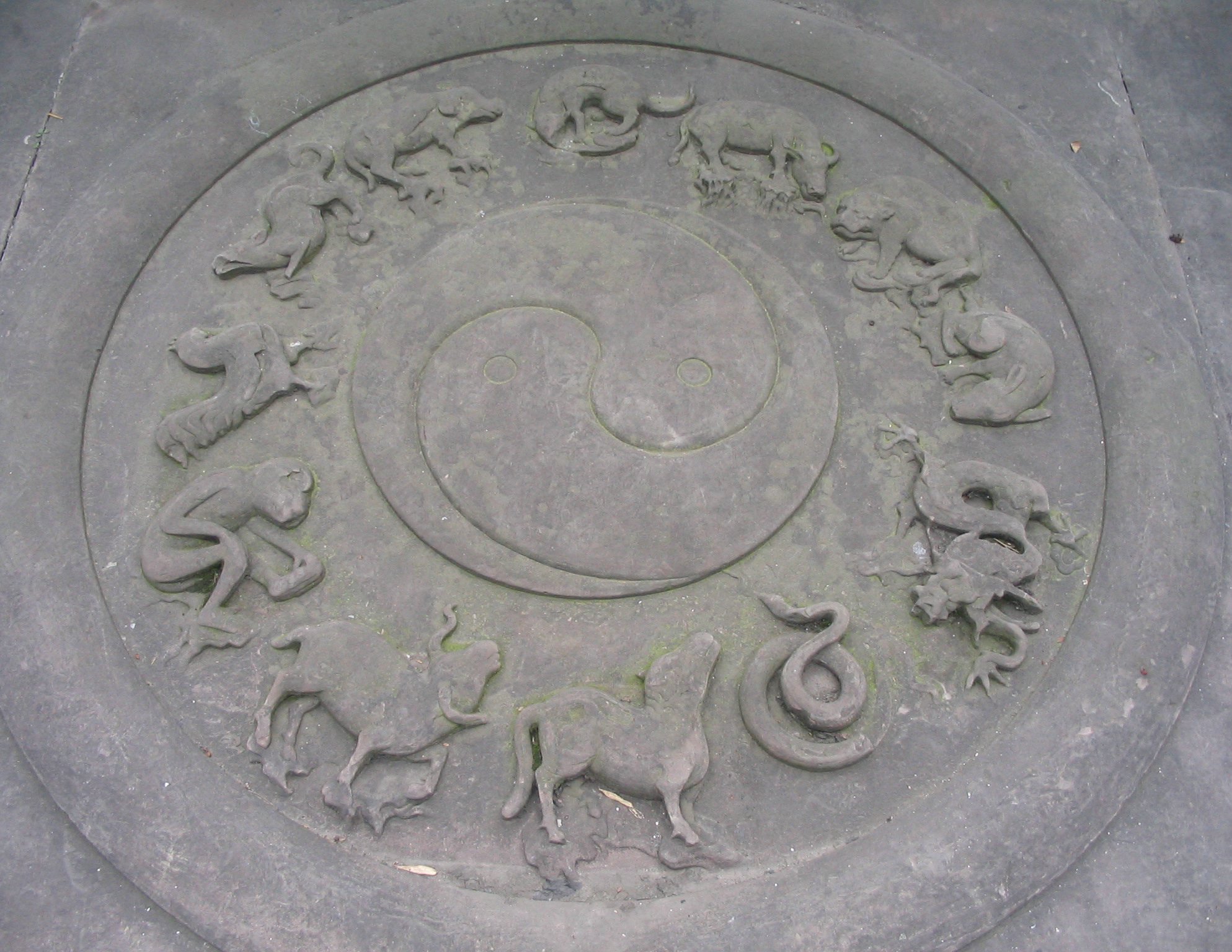
By observing the position of stars in the sky, Chinese astronomers discovered the regular pattern of Jupiter moving about 30 degrees every year and it takes 12 years for it to finish a celestial circle (the orbital period of  Jupiter moving around the Sun is 12 years, 11.86 years to be exact). Based on this observation, Chinese astronomers divided the celestial circle into 12 sections called 12 Earthly Branches (地支) to follow the orbit of Jupiter. The ruling role of the Jupiter in ancient Chinese daily life was profound and it was recognized as the Year Star (Sui Xing, 歲星). However, Jupiter moves in a counterclockwise direction around the yellow belt (Yin direction) which is opposite from the habit used on Earth for direction. Chinese astronomers thus created a phantom star call Tai Sui (太歲) that moves in a direct opposite direction of Jupiter (in Yang direction (clockwise)) around the yellow belt with a cycle of 12 years. The twelve years of the Jupiter cycle not only identifies the phantom start "Tai Sui", but also provides the foundation of 12 Earthly Branches, the 12 Chinese Zodiac, the Chinese hour in the form of double-hours,12 directions, and the Chinese Sexagenary cycle, etc.

Tai Sui was considered as a guardian star that held the same standing as an emperor and the direction of Tai Sui was considered the direction of best luck. However, the prestige of Tai Sui is unchallengeable, the civilians don't have what it takes to get benefit from it; in contrary, it's advised to avoid facing it directly as it might offend the supreme star which could bring misfortune. It's the same idea that civilians couldn't look directly at the Emperor in ancient time. In time, the guardian role of Tai Sui was neglected and the evil influence prevailed.

Tai Sui was first recorded to be apotheosized in Eastern Han Dynasty (25–220 CE). It was until the Jin Dynasty, the Emperor Zhangzong (August 31, 1168 – December 29, 1208) started to worship his mother's natal star to pray for a fast recovery from her illness, the Tai Sui worshiping culture (An Tai Sui, 安太歲) got its popularity. Later on, 60 honorable generals were apotheosized as Tai Sui to assist the Jade Emperor (the king of all dieties) in taking charge of the well-being of the mortal world. Each of them takes turn to be in charge for a year; 60 generals (Tai Sui) match the 60 years of Sexagenary cycle.

The basic rule of An Tai Sui can be simplified as follows: each year, those whose Chinese Zodiacs are in alignment with Tai Sui/Jupiter are considered offending the Tai Sui (2 Zodiacs) while those whose Chinese Zodiacs form an angle of 45 degree from Tai Sui/Jupiter are considered conflicting the Tai Sui (2 Zodiacs). For example: this year, 2011, is a rabbit year, which means Tai Sui is orbitting upon the Rabbit Zodiac. Together with the Rooster (on the direct opposite direction of rabbit) are considered offending Tai Sui. Meanwhile, the Rat and Horse form an angle of 45 degree from the rabbit (where the Tai Sui is located) are considered conflicting Tai Sui (take a look on Tai ji and 12 Zodiacs pic for better understanding). It is advised those signs to go throught a prayer for blessing in avoidance of the evil influence of Tai Sui that might bring misforturne.

The An Tai Sui ceremony was as simple as writing down words like "The Tai Sui of this year is here" on a yellow or red paper and posted it on a wall then worshipped it with joss sticks twice a day through out the whole year. In the end of the year, the paper was torn down and burned. Nowaday, people go to temples around Chinese New Year (usually before January 15th of lunar calendar), pay some money (NT$600~1,200) and have the professionals say the prayer for them. In Taiwan, those whose Chinese Zodiacs offending/conflicting Tai Sui go to temples and write down their names and birthdays in lunar calendar (Gregorian-Lunar Calendar Conversion Table)(including the hour of birth). The information will be written on a piece of red paper and posted on a wall with a LED light lit up throughout the year (some have a buddha statu embeded in the wall). To identify the paper that has your name on it on a wall from hundreds of similar papers on it is not an easy task. The Tainan Kaiji Wu Temple (No.114, Xinmei St, Central-West District, Tainan city) introduced a system to help to locate your Tai Sui easily. You will be given a 6 digit number that is unique for your Tai Sui, keyin these digit on the locator, all LED lights on the wall will be switched off leaving only your light turned on for a while. Other temples also embrace modernization: you can pay the money via creadit card or even do it online.

Saturday, December 26, 2009

Mysterious and mighty street dancers

The national Ba Jia Jiang and Guan Jiang Shou competition has been held in Ci Feng Gong (39, Zhong Shan Rd, Pingtung City, a 5 minutes walking distance from the Pingtung train station) for 6 years in a row. I didn't know the difference between Ba Jia Jiang and Guan Jiang Shou so I used to ignore the term " Guan Jiang Shou" and unified the two as Ba Jia Jiang, unitl now.

Ba Jia Jiang 八家將
You can see these dancers in almost every temple ceremony in Taiwan. There are at least 5 theories for the origination of these dancers. Despite the diversity of origination theories, many people are convinced that these dancers are subordinates of Wu Fu Da Di (the five deities of plague whose job is to evict plagues from the living); leading the way for their master on an inspection tour. The number of the group varies from 4, 6, 8, 10, 12, 16 up to 32. Traditionally, there are eight of them doing their special dance in folk activities, usually involving some deities' birthday.

Generals Gan, Liu, Fan and Xie, the main characters in this eight-person group, whose responsitilities are executing arrests and punishments. General Gan's makeup has an octupus-shaped eye and general Liu has red and black dual-colors painted on his face. Gan and Liu are responsible for executing punishments. General Fan, dresses in black with his face painted in black and eyes in white; general Xie, on the contrary, dresses in white with a black bat symbol painted on his white face, and has a long tongue sticking out. Arrestting is their job. The other 4 characters are seasonal deities, spring, summer, autumn, and winter having dragon, bird, tiger and turtle symbols painted on their faces respectively. Their responsibilities in the group are investigation and inquiry.

A team of 13 is a better number to organize such a performance. It starts when the deity gives a direct order to a subordinate and then this order is passed on to general Fan and Xie by a messenger. General Fan and Xie arrest and hand over the criminals to general Gan and Liu for punishment. After that, 4 seasonal deities start their investigation then a clerk files the record and a guard puts the criminals in custody. Once the team has their makeup done, they are not allowed to eat meat, and should project an air of dignity. Moreover, when the performance has started, it is forbidden to cut through the group, especially for women.

Nowadays, it is difficult to distinguish each individual from their costume, makeup, and dancing. The meaning of this unique religious ritual has been distorted and varies from group to group.

Guan Jiang Shou 官將首
Literally, Guan Jiang Shou means chief of senior officers. There are 4 major theories about the origination of the characters in Guan Jiang Shou and they all end up to one legend: Guan Jiang Shou are subordinates of Ksitigarbha (Di Cang Wang), the god of hell, they were 2 demons subdued by Ksitigarbha and have become his guards. The 2 generals can see through good and evil qualities in people, general Zeng (增) has the power of giving extra lifespan to good people and general Sun (損) can take away lifespan of bad guys. They are the chief of senior officers leading the way and casting away any obstacles for their master on an inspection tour.

To make the dance better looking, general Zeng was duplicated and a team of 3 is the most common composition of Guan Jian Shou. The signatures of Guan Jiang Shou are long, sharp, protruding teeth, thick and long eyebrows and extravagant capes. The facial paintings are red and green basis, white lines creating a fire pattern with their forehead, nose and chin gilded. There are 2 styles you can find: 2 general Zeng are painted red (sometime, one of them is painted blue) standing on the 2 sides of the group holding handcuffs and tablets of fire and general Sun is painted green standing in the middle holding a trident and a flag of order. The second version is that general Zeng is painted green standing in the middle of the group holding a trident and a flag of order while the duplicated general Zeng is painted red standing on the right side of the group holding a tablet of fire and handcuffs and general Sun (painted red) on the left holding a tiger tablet and handcuffs.

The Guan Jiang Shou dance is more of a marshall type style compare to Ba Jia Jiang, which is softer. A signature difference can be found in the facial expressions of the dancers with the Guan Jiang Shou making fierce and angry poses.


Saturday, September 19, 2009

Confucious Culture Festival

The confucious temple in Tainan (ref. 1) is the oldest one in Taiwan and a ceremony is held every year on confucious' birthday at dawn (around 5:00AM), the 28th of September, not only in Tainan but also almost all confusious temples in Taiwan. I wanted to write an article about the ceremony in English as I couldn't find such information in Tainan official websites so I did some research and found a website (Taiwan Confucian Temple, ref. 2) that is made by the Council for Cultural Affairs which has already posted the most detailed information of Confucious, the history and building style of Tainan Confucious temple and the cultural ceremony. Using that information as a backbone, together with the information from Taichung Confucious temple (ref. 3), Taiwanschoolnet (ref. 4) and Wikipedia (Ref. 5); the ShiDian Ceremony (釋奠典禮, literally “display-presentation” ceremony in Chinese) is summarized as follows:

(1) The Ceremony Begins

(2) First Drum Roll
Light up candles and incenses, musicians, dancers, and ceremonial attendants standing by. The musicians beat the Jing drum placed in transverse on the west of the Yi Gate. The first beat on the drum ring one time, followed by repeated beating in the center of the drum with both sticks, one heavier than the other and from slow to fast and from weak to strong, before slowing down and eventually becoming still followed by a heavy beat in the center. Another musician makes a heavy beat of the bell hung on the east of the Yi Gate as the end of the session.

(3) Second Drum Roll
Assistant Sacrifice Officers standing by. The whole session is conducted following the step given above, only the first beating on the drum ring and the bell sounds are performed twice.

(4) Third Drum Roll
All presentation Officers standing by. Following the step given above, the first beating on the drum ring and the bell sounds are done three times.

At dawn, the solemn drum beating is accompanied by the remaining bell sound, making one show respect.

(5) Musicians and dancers take positions
The musicians follow the lead of a guide who holds a "Hui" (Banner of light red silk) with the rhythm of drum (5-step-and-1-pause pace) going up to the platform from the east and west stairs and take their positions.

Yi dancers enter into the plaza in pairs from the east and west corridors by following the lead of a guide who holds a "Chien" (Tasseled Staff, a banner with tassels of silken cord hung at vary-ing levels), with the rhythm of drum (5-step-and-1-pause pace) to the stage in front of the Da-Cheng Hall.

(6) Ceremonial Attendants Take Their Designated Positions
The musicians, Yi dancers and the inner and outer shift officials come in 4 teams on the east and 4 on the west, totaling 8 teams. Centered by the Confucius tablet, the formation comes in symmetrical levels.

(7) The Ceremonial Supervisor Takes His Designated Position
Led by the guides, the formation stands to the southeast of Dan Chi (丹墀, red stone stage) and face southwest. The supervisor oversees the ceremony and corrects errors if any.

(8) The Assistant Sacrifice Officers Take Their Designated Position
The second consecration officers enter into the plaza from east and west and are led by the servers. Standing in the south side of the Ta Cheng Plaza, they face the hall.

(9) The Collateral Presentation Officers Take Their Designated Positions
8 officials are assigned to the east and west levels, east and west virtuous, the virtuous and Confucians in the east and west rooms. In the order of Confucians, the virtuous, intellectuals and levels, the officials enter into the plaza from both sides in symmetrical order to wash the hands and then take position by the accompanying officer, facing the Ta Cheng Hall.

Their job is to present the sacrificial feast to the other respectful spirits that are worshiped in the Confucious temple.

(10) The Principal Presentation Officer Takes His Designated Position
The principal consecration officer is led by the guide to wash the hands first before proceeding to the front of the accompanying consecration officer, facing the Ta Cheng Hall. The entrance is conducted in the symmetrical manner and the last one that enters is the principal consecration officer, in opposite position to the Confucius tablet, suggesting the interaction between people and God.

(11) Opening the Gates
Together with the Yi Gate and the Ling Hsing Gates outside the Yi Gate, there are 5 each in front of the Ta Cheng Hall and they are closed most of the time and open only for the ceremonial ritual. The door-opening server opens it before opening the Ling Hsing gates.

(12) Burying the Sacrificial Remnants
A pig, a cow, and a goat was sacrificed before the ceremony. As of the dipping of cow hair in blood in the ceremony, the hair stands for life and blood for killing. Both are kept in a tray that is held by the server. Coming down from the Ta Cheng Hall, the servers pass by the plaza, the Yi Gate, leave the Ling Hsing Gate and arrive the west side of the gate to dig a hole and bury the hair dipped with blood; a ritual of purification and nourishment of the earth. Burial in the west as the westside indicates the elements of gold that has characteristic of chill and killing. Vegetable is used today in stead of cow hair. The ceremony is only to remind us of the legacy as burial of the hair dipped with blood indicates conservation of morals and mercy.

(13) Welcoming the Spirit
The musicians beat the drums and the bells as the beginning of the ceremony. The 3 drumbeats are accompanied by the harmonious melody. The banner crew raises the banners and the Chu players beat the instrument 3 times. Accompanied by the drum and bell beating, they leave the left and right doors of the Yi Gate and the Ling Hsing Gate in 2 lines in a symmetrical manner from the east and the west doors. Four ceremonial attendants carrying 2 lanterns and 2 burners, leading, followed by 6 ceremonial attendants holding 2 axes, 2 Halberd ("Yueh", similar to the “fu” halberd, but slightly larger), one fan and an Umbrella. Eventually they make 3 bows outward before returning back to the Ta Cheng Hall from the central door.

(14) First Ceremony of the Three Bows
The reverence offered by the welcome procession when returning back to the Ta Cheng Hall from the central door used to be kneeling in the past, today, bows are offered instead.

(15) Presenting the Sacrificial Feast
Accompanied by the harmonious melody, the ceremony servers opens the lids of all ritual objects and move those without a lid before returning to their standing positions.

(16) Offering Incense
As an independent session, this is a part of the welcome ritual. In the past, the harmonious melody was adopted and the principal consecration officer and the accompanying one used to offer incense to all gods and the 3 bows. Since, 2003, the peaceful melody was adopted instead for the preliminary offering, making the session the core of the entire ceremony.

(17) Initial Principal Presentation
The musicians beat the drums and the bells 3 times before playing the peaceful melody. The banner servers raise the banners and the bamboo holders raise the bamboo. After beating the 3 wood instrument 3 times and the bell, the Yi dance begins along with the music. At this time, the principal consecration officer follows the guide to the Confucius tablet in the Ta Cheng Hall for the preliminary offering. The offering includes ceremonial money bill that is made of silk in white color and bearing no characters), liquor and the 3 bows. (Initial Yi dance animation in flash format)

(18) Initial Collateral Presentation
The accompanying consecration officer follows the guide to the east and west virtuous, east and west scholars and the east and west rooms for the preliminary offering in the same procedure as above.

(19) Chanting the Blessing
The principal consecration officer stands in front of the incense table and the accompanying consecration officers in front of the tablets, the lector reads the congratulatory and finally offers the 3 bows.

(20) Second Ceremony of Three Bows

(21) Second Principal Presentation
The accompanying consecration officers proceed with the secondary offering in the same procedure as above. ( Secon Yi dance animation in flash format)

(22) Second Collateral Presentation
Together with the Yi dance and the music (peaceful view melody), the principal consecration officer follows the guide back to the tablets for the offering of liquor and the 3 bows.

(23) Final Principal Presentation
The accompanying consecration officers proceed with the final offering in the same procedure as above.(Final Yi dance animation in flash format)

(24) Final Collateral Presentation
This is a ritual is conducted with the peaceful melody, not available in the sessions held in other counties and cities.

(25) All bow 3 times

(26) Officers offering incense
With the harmonious melody, the banner crew raises the banners and the bamboo crew raises the bamboo. All drums and bells sound up. The officers, offspring of Confucius follow the guide to the tablet of Confucius from the east to offer the incense and the 3 bows

(27) The Drink of Good Fortune and Receipt of Sacrificial Meat
The principal consecration officer follows the guide to the incense table in the Ta Cheng Hall and takes the cup (fortune liquor) and the fortune meat and finally the 3 bows before returning back to his position. Chinese believe the drink and sacrificial meat that offered to the spirits are blessed, sharing the offers gives the blessing to participants.

(28) Removing the Remnants of the Sacrificial Feast
Together with the harmonious melody, all officials return the lids to the objects on the table and reset the ones without a lid.

(28) Escorting the Spirit
With music and drum beating, the session is conducted just as in the welcome the god, with the harmonious melody, the procession leaves the Yi Gate and the center one of the Ling Hsing Gates.

(29) Sending the silk spirit-Money and Prayer Inscription
The wood instrument holder keeps the instrument and the cloth holder keeps the cloth when leaving the Ta Cheng Hall, the Yi Gate, and the Ling Hsing Gate to the incinerator to burn the congratulatory cloth.

(30) Observing the Incineration
At this time, the harmonious melody is played together with drum beating. The principal consecration officer follows the guide through the Yi Gate, the Ling Hsing Gate to the incinerator to complete the ceremony and the session of farewell to the god.

(31) Resuming Positions
The principal consecration officer follows the guide back to his position and the procession, the wood instrument holder, the cloth holder come back from the Yi Gate, the Ling Hsing Gate on the side.

(32) Closing the Gates
The servers close the Yi Gate and the Ling Hsing Gate.

(33) Withdrawing Positions
The principal consecration officer, the accompanying consecration officer, the accompanying officers retreat from the Ta Cheng Hall following the guide and the servers, the musicians and the Yi dancers retreat accordingly.

(34) The Ceremony Concludes

Ba Yi Dance 八佾舞
Yi (佾) means row/column, and Ba Yi means 8 rows in 8 coulmns (8 dancers in 8 rows, 64 dancers in total). The dance is performed in 8, 6, 4, and 2 rows in accordance with rank in the empire, from emperor (8) to literati (2). Though Confucius wasn't an emperor, and Ba Yi dance is performed exclusively in the ceremonies pertaining to the emperor, there were precedents of the Ba Yi dance performed in select occasions in the Tang and Song dynasties. Recognizing the great merits that Confucius had achieved in education and politics, the emperor ordered that Ba Yi dance to be performed in the First ceremony rite for celebrating the birthday of Confucius. As the stage for the Ba Yi dance has to be big enough to accommodate 64 Yi dancers as well as Confucious was not a emperor, the Liu Yi dance (6 dancers in 6 rows) are commonly performed.

The dance is performed to show the highest respects in the rites of the ceremony for celebrating the birth of the Sage Confucius. The ceremony is divided into 3 main chapters and performed at the initial, second and final principal presentation, respectively. Each chapter contains 8 phrases and each phrase is composed of 4 words that creates 32 routines in each chapter. Yi dancers perform these routines (32X3, 96 in total) in pair with rhythms of music. The dancers stand in rows on the stage with the left hand holding the Yue, and the right hand holding the Di. The tip of the 3-foot long Di is a beautifully painted dragon head. The Yue is 2 feet long, and originally it was a pipe (the musical instrument made from bamboo). Both Di and Yue serve as ornaments to the dance. 3 robin’s tail feathers are attached to the end of Di. According to the Chinese ancient customs, the feather of the robin's tail is the most beautiful. Therefore, it's taken for showing the highest respects to Confucius.

Friday, March 27, 2009

Human flesh search invasion

Unlike conventional search engines, human flesh search engine uses internet resources and conventional search engines such as Google and Baidu as databases, whereas thousands of individuals with different specialities are the searching algorithms. One person's result can be the others' keyword: a video posted online can tell the location of the event took place by analyzing the background and its uploading IP address; model of the video that used to take the clip narrows down the target in specific communities... The engine works scary efficiently that most of the cases were concluded within a week.

The human flesh search was stared in 2001 in China when a guy posted a girl's photo alleging that she was his girlfriend. Soon the identity of the girl was dug out and her personal information was publicized as proof that he was lying. Later on, the cat abuse event in 2006, an old guy was beaten up by a drunk in 2007 and a woman committed suicide because of her husband's betrayal in 2008, etc., in every scenario, guilty or innocent, targets were lynched by exposing them to the baleful publicity.

The idea of human flesh search is spreading out and is invading Taiwan, maybe the world, insensibly. Here are the two cases from Taiwan recently:

Case 1: Second hand DSLR
A teacher wanted to sell a second hand DSLR and found a candidate buyer whose occupation is architecture. The trade was concluded after an hour inspection of the item by the architect, they both went home with what they wanted. A few days later, the architect posted an article online in which he accused the teacher of selling him a defective DSLR and had no intention to take responsibility. Based on the article, members of that community embarked a human flesh search and found out the identity of the teacher. Within a day, all personal information of the teacher such as real name, websites, occupation, addresses, phone number and etc. were exposed online. Later, the teacher stood up for his rights and told his version of the story. All of a sudden, the situation was in favor of the teacher and a human flesh search on the architect was conducted rampantly. Bitter words engulfed the architect's websites and flowed to websites that the architect marked as friends after shutting down the comments feature of his websites. The story ended after a series of apologies from the teacher and the architect especially.

Case 2: The ghost island
"Last week, opposition Democratic Progressive Party lawmaker Kuan Bi-ling accused Kuo of having posted articles describing Taiwan as a "ghost island" and native Taiwanese as "redneck" and "Japanese pirates" under the alias of Fan Lan-chin. Kuo denied Fan was his pen name, and the articles were his work"(excerpted from Taiwan News). Cross validation of all factors by netizen indicate that Kuo Kuan-ying is Fan Lan-Chin and Kuo confessed on Mar. 23rd.

The purpose of human flesh search is to dig out the fact and help those vulnerable minority. However, it can be easily misdirected due to the difficulty of validation of information provided in the virtual world. Human flesh search reflects the majority's moral perception on the event (ex: one shouldn't sell a defected item even though it was a second hand), however, morality is easily clouded by emotions from oneself and the crowd. Ironically, in order to restore the justice of morality, human flesh search infringes target's privacy immorally. In the name of justice these vigilantes become lynch mobs, human flesh search is a mean to achieve self-moral satisfaction.

"In the first case involving cyberviolence and a "human flesh search engine" in China, a court has fined a Web site and an Internet user for posting personal and intimate details about an unfaithful husband, his mistress and a spurned wife who committed suicide" (excerpted from International Herald Tribune). In December 2008, The People's Court in Beijing called the human flesh search an alarming phenomenon because it is causing cyberviolence and privacy law violation. The power and influences of human flesh search have caught attentions in China whereas the idea is still digesting here in Taiwan. Privacy infringement was overlooked while netizen in Taiwan felt contributed to a second hand DSLR trading argument; members of DPP celebrated for the triumph of exposing an ineligible KMT diplomat.

If only there were evil people somewhere insidiously committing evil deeds and it were necessary only to separate them from the rest of us and destroy them. But the line dividing good and evil cuts through the heart of every human being. And who is willing to destroy a piece of his own heart?


Aleksandr Solzhenitsyn

Tuesday, May 01, 2007

Que pensez-vous du Vietnam?

On my way to the airport, I waited for the staff from the hospital to pop up with the question: what do you think about Vietnam? It’s like Sunday always comes after Saturday, no exception, they always bring up this question on my last day in Vietnam. Maybe it’s because they want to make sure that I have been treated well during my stay or they really want to hear different perspectives on their country from a foreigner’s eyes. I never know how to answer this question. I enjoyed and hated their overwhelming hospitality even though it’s built on benefits from this co-operative project. I am impressed by how fast their economy blooms after the government opened its doors to the world--motorcycles (both in number and type) in the street reflect the economic fluctuations yet I am also worried about the intensifying conflicts between traditional cultures and westernization in the communist society. I felt frustrated on their attitudes toward new technologies that we introduced and sorry for the conditions that compel them to earn a better life. There are too many emotions and I can’t simply put it down in one sentence, so even though I was prepared for the question, my answer was still vague.

I was surprised to see a mini-demonstration in HCMC. April 11, a group of people, around 20, wore little flags on their heads holding red banners with white words on them, surrounded by lots of tourists and security, it caught my attention. They were standing at the circle on DL Le Loi and it didn’t take long for police (in yellow-pink uniforms) and tourist security (in green uniforms) to escort the group to the park in from of the Municipal Theatre trying to contain the chaos. The wailing of military sirens intensified the situation and troops came from nowhere in minutes. Police started to open the congested roads whereas tourist security kept their eyes on tourists to stop them from taking pictures of the event. I was amazed to see a woman shouting at a police officer in such tense circumstances and I have no idea what this demonstration was about since my skill for Vietnamese is zero. I didn’t know how this incident ended and it was not surprising that there was no info regarding this event in the newspapers the next day.

Thursday, April 12, 2007

Bonne nuit Vietnam

Despite the chaotic traffic conditions in Ho Chi Minh City (HCMC), it’s surprisingly easier to take a walking tour in HCMC than in Bangkok or even in Taipei. Of course, it depends on which district you are in and you would have to set aside all the rules you have learned in your country. For example: traffic lights here are just references; it transforms to a standard of when to stop/go only when there are police present. So how do you cross a street? The trick is occupation, without a 3 dimensional road system, all you have to do is to step forward inch by inch; once you occupied the area the others will give way. The key to success in doing this is determination; you have to show your determination on your direction otherwise you would be stuck in the middle of the traffic or even worse be hit by a car/bike. Of course shit happens, my advice is to open your eyes and ears then move agilely and bravely.

Stereotype has it that westerners are relatively open-minded when it comes to romantic relationships. However, chances to spot Vietnamese couples hugging, touching or even kissing in public in HCMC are much higher than in westerner countries. The same phenomenon can also be found in Hanoi and China. Parks, sidewalks even on the side of boulevards, massive numbers of young Vietnamese couples sit together on the ground regardless of everything else; something that can only been seen here. I believe that westernization plays an important role in such phenomenon but what converts Asians into romance practitioners in such massive scale still puzzles me…maybe a leftover from the French Colonial Period?

Wednesday, December 13, 2006

Holiday request

To be a desirable company, paid holidays is one of the criteria, but actually how many people can take their holiday without worrying of being given a bad score on the annual performance record which is critical for promotion or even worse being sacked. Basically, bosses in Taiwan are spoiled and they don't like employees taking holidays for three reasons. First, despite the representative system, no one can 100% cover the others' duties especially for those well organized big companies. Everyone is assigned to specific jobs and the overlap is small. Taking a long holiday might jeopardise the process of a project, so it's difficult for them to take a long vacation. Second, even works can be covered 100% by others, taking a holiday would shorten the manpower thus the production rate drops, that's not what big bosses like to see. Third, bosses simply don't like the idea of the paid holiday; why should I pay somebody even if he/she isn't at work? So making a holiday request is an art in Taiwan. I can't help wondering... was Taiwan's economical miracle built on such exploitation? and was the stereotype of Taiwanese as workaholics a factor in this vicious cycle?

The system of job responsibility is a blessing for those whose working hours are irregular, however in Taiwan this system is a punishment for those who do have responsibilities. Because of their sense of responsibility, workers wouldn't take holidays in the middle of a project and projects never stop coming! For those who follow the clock in and out system get compensation if over work is inevitable. Also, because of their regular working hours, they are considered as eligible laborers who are protected by the labors law. By law companies must transfer 6% of employee's salary to their account as retirement pension. However, this system doesn't apply to those whose working hours are irregular, despite the fact that they pay labor insurance every month. Of course, there is no labor day for them either.

Sunday, November 05, 2006

Wedding


After a 14 year boy/girl friend relationship, Jonglin and Jalin are now husband and wife. The wedding was held on Nov. 4th in Jayi and was orgainzed by Jonglin 6 months ago. Lots of tranditional Chinese wedding customs are considered such as a bamboo sift with spells painted on it covering the bride's head when she is going out of the house as not to offend the gods; discarding a fan when the limousine is heading to the groom's house represents the bad habits of the bride been left behind; crossing over a charcoal fire to keep evils away; and stepping on a tile and breaking it means the past has ended and a new life with new family is starting also brings good luck for having a baby boy.

The wedding was a great success. Send them a congradulatory note here.

Wednesday, November 01, 2006

Photo Exhibition

I dream about someday when I can have my photos exhibited in an art gallery and receive compliments from people who are really appreciative of my work and of course publishers offer me checks at the end of the exhibition. Well, I did exhibit my photos in public once but the reality was too far from my fantasy. Institut Pasteur France, NHRI and CDC Taiwan, held a symposium on re-emerging virus infections on Sept. 1. On that night I had my photos printed in 5 huge posters, each of them told a different story about the customs of Taiwan or the heritage of Tainan. The posters were hung in the entrance at the college of NCKU Hospital, each of them had 2 lights to create the illusion of being displayed as in an art gallery.

Lantern Festival
Lantern Festival, also known as Yuan Shang Festival, takes place on the fifteenth day of the first month of lunar calendar. Being the last festival in a series of celebrations for lunar new year, it is widely celebrated by families all around Taiwan. On the night of the festival, decorative lanterns depicting birds, beasts and historical figures can be seen in almost every city. The night sky on Lantern Festival is also illuminated by the Tainan Yanshui fireworks and Taipei Pinghsi sky lanterns-known together as "Fireworks in the South, sky Lanterns in the North". Other folk activities such as the customary lantern riddle parties enrich this night even further. In addition to dispalying and appreciating lanterns, Lantern Festival is also celebrated by eating Tang Yuan which is an important custom symbolizing family unity and indispensable to the day's festivities.


Mysterious and mighty street dancer
There are 5 theories for the origination of these dancers. Despite the diversity of origination theories, many people are convinced that these dancers are subordinates of Wu FU Da Di, the five luck deities. The number of the group varies from 4, 6, 8, 10, 12, 16 up to 32. A group of 8 are often seen in folk activities doing their special dance. The theme of the dance is 'arresting'; a team of 13 is a better number to organize such a performance.
It starts when a deity gives an order to his subordinate and then this order is passed on to two generals, Fan and Xie, by a messenger. General Fan and Xie arrest and hand over criminals to general Gan and Liu for punishment. After that, 4 seasonal deities start their investigation then a clerk files the record and it ends up with a guard putting criminals in custody.

ChihKan Tower
This was originally the site of Fort Provintia built by the Dutch in the 1650s as they outgrew Zeelandia. It included two bastions, one at the northeastern corner and one at the southestern corner. On top of each stood a watchtower. It has undergone changes from the Ming Dynasty through the Ching Dynasty to the Japanese occupation period and Taiwan's Retrocession. Fujienese-style building were built on the site during the Ching Dynasty, followed by a temple during the Japanese occupation period. When the temple was destroyed in a typhoon, excavations revealed a corner of the original northeastern bastion. Today, Chihkan tower is a multi-storied temple, similar in apperance to a traditional Chinese shrine or temple.
Scattered around the complex's garden are stone tablets, a stone horse, stone camels and a row of nine turtle-borne steles with texts inscribed in both the Chinese and Manchu languages. Inside, Chihkan Tower contains exhibits relating to Koxinga, and an altar for worshipping the god of literature. This is where students come to pray for a good performance on examinations. (text copy from net)

Tainan Confucius Temple
The Confucius Temple is an embodiment of Confucian culture in architecture. The largest and oldest Confucius Temple in China is
located in Confucius' hometown in present day Chufu, Shantung Province. For over 2000 years, this temple has gradually evolved into its current magnificence and size and serves as the blueprint for all other Confucian temples.
Of the approximately thirty confucian temples of varying sizes in Taiwan, the Tainan Confucius Temple is one of the most breathtaking and representative. This temple was founded in the Ming dynasty and converted into a prefectural school during the Ching dynasty. A plaque hangs in the temple from that period on which it is written, " the Head School of Taiwan".
The confucian temple in Talungtung in Taipei was founded during the Ching dynasty and renovated in 1927. Its main structures include the Ta Cheng Hall, Ten Thousand Fathom Wall, Pan Pond Ling Hsing Gate, Gate of Rites, Sage Worship Altar, Ming Kun Hall, Chu Tu Alter, Kui Hsing gate (after the God of Literature), and the Wu Sheng Shrine.
Every year on teachers' day, a solemn ceremony is held according to ancient rites called the " Confucius Memorial Service," and is attended by Chinese and foreign visitors. (text copy from net)

Anping Tree House
The tree House is not a mere deserted house. Since what was the warehouse of a trade company left it alone, it was covered by trees. the root has been growing from the wall so that water may ooze out from brick wall, the difference between a wall and a trunk could not be clarified. It is plausible story that all the things are not destructed but transition from one to another. It is a beautiful dilapidated house like its name. (text copy from net)


This was the first public exhibit of my work. I hope to have many more occasions to show my work in public and that you will like it so much that you want to send me a check.

Tuesday, October 17, 2006

Culture experiences

I was shocked by the news on Sept 23 in Vietnam News entitled “Traffic safety month sees rise in accidents”
The ministry of public security’s road traffic department released data showing rises in both the number of accidents and the numbers of deaths and injuries. It recorded 627 accidents with 460 fatalities and 528 injuries from the beginning of September to September 15…This issue didn’t follow a logic of more patrols and heavy punishments would reduce the number of violations… The government of Vietnam has requested Japan to help fund a project in order to improve traffic conditions on urban and major national road systems.
What shocks me is not only the number of traffic accidents in 2 weeks but also the measures the government took in order to tackle the issue. It seems requesting funds from other countries is the first step of solving problems. Germany donates US3.75 million to improve health services; NIH from US helps to fight HIV… the list can go miles long. The problem is when these funds dry up, what measures would the government take to keep the work going? Could they adapt from the experiences and develop ways to meet their own needs? It’s like the project I am working on right now. We showed them how to make a faster and more reliable diagnosis on encephalitis, but it seems to me the hospital isn’t going to implement this technique to their lab. Actually, I have been trying to push everybody to do something that should have been done before my arrival. I would have to say almost nothing was prepared when I arrived. The only difference from the last time I visited was some new equipment, scattered in different rooms of the lab. I have been asked this sensitive issue of “the budget” many times and I got the feeling that they will do whatever they have to do to get the funding for the next year but that’s about it, nothing more. That means if we are going to evaluate the project of clinical trial of EV71 at the end of the year then that’s the only project they are going to invest money in. Of course finance is a big issue here, but it’s the system that makes finance a problem here if you ask me. There are some doctors who don’t like the system as well, but their voice won’t be heard because of their ranking in the hospital. I wonder if someday these once considered “heretical” doctors reach the top level; would they stick to the ideals they were pursuing when they were in a lower ranking or would they be perverted and see only the so-called “a big picture”? Maybe they would never reach the core by possessing different thoughts. From where I stand, it seems the purpose of living here is not pursuing happiness but salvation.

I asked some of my friends how much they get paid for being a doctor here in Vietnam and the answer was almost unbelievable, which is only USD 30 per month. How can anybody survive when a bottle of water costs one third of your daily salary? No wonder everybody packs their bags and leaves at 16:00 promptly everyday then heads to their private clinics where doctors here nicknamed them fish farms and fishing means examining patients. The purpose of staying in a government run hospital is to gain reputation. It’s like paving the road with lure to attract fish to the fish farm so they can do the fishing, except the lure is the reputation and the fish are patients. So there is a unique paradox here: everybody works hard, after all, most people have two jobs, yet they seem to not take it seriously.

Thursday, October 12, 2006

Something New

I was waiting for my friends in the lobby of my hotel one day; we were supposed to have lunch together. One of my friends showed up and told me that one of his friends was getting married and he invited me to go to the wedding, so we went to the wedding instead. I wanted to try the “cyclo” before I leave the country but I never had the nerve to give it a try. Lucky for me, my friend was on a motorcycle that day so I was happy to have the chance to experience what it feels like to drive in a bustling street on motorcycle. Well, except for driving through one intersection, it was not as terrible as I imaged it would be even though we saw a few accidents on the way. I was embarrassed for dressing like a “Tai ke” (T-shirt and sandals) when I got to the wedding since everybody was nicely dressed. The groom works in a pharmaceutical company operating on foreign investments. In the wedding I saw many foreigners from different countries, such as India and of course from Taiwan. The wedding started with ballerinas dancing and then the host introduced the parents from both families and the bride and the groom, accompanied by dancers were sent to the stage on a conveyor belt. After a short speech, the bride and the groom filled champagne glasses and cut the wedding cake. The ceremony ended with balloons being released and the sound of them popping mimicked firecrackers, then the lunch dishes were served.

Just like a wedding in Taiwan, the newly wedded couple and both families’ members offered toasts, table by table during the meal. Also, a professional band was hired to do a performance during the lunch but it ended up as a karaoke and dance for guests, unlike weddings in rural areas of Taiwan, where you might expect a strip dance or elegant classical background music for a wedding held in urban areas of Taiwan. The party here revealed the fact that every body was having a good time. Another difference in custom from Taiwan, here the bride and the groom don’t have to change their dress every 20 min or so. After the lunch, the newly wedded couple stood in front of the gate to show their appreciation for the presents from guests. I had my picture taken with the bride and the groom.

Back in Taiwan I had never celebrated the double ten national holiday before. This year I had the honor to participate in the 95th double ten national holiday of the Republic of China that was held in Legend Hotel by Taipei economic and cultural organization in HCMC. I was told to dress nicely so I borrowed a white long sleeve shirt , any color but red, since the political issues in Taiwan, from the lab and that wasn’t an easy task since Vietnamese are relatively smaller in general. I decided not to take the camera with me so I wouldn’t look like a photographer from a newspaper or agency, then I regretted it immediately when we arrived at the venue. It was nicely decorated; on the stage the activity was written in 3 languages, Traditional Chinese, English and Vietnamese. It was nice to hear people talking in mandarin since I haven’t spoken mandarin for nearly one month and my ability to it is deteriorating. I was eager to speak to someone however I found it’s difficult to cut into the exchanging of business cards or conversations about corporate revenues. I introduced myself as a person who is helping the lab in Children Hospital No 1 with a cooperative project. I looked at them and I got the feeling they didn’t care a bit. Anyhow, it was an extraordinary experience for me, it was the first time I celebrated the birth of my country and it took place in a foreign country. By the way, the buffet was nice, especially the apple tart. I can still taste the smell of cinnamon and the creamy texture of the apple in my mouth.

Monday, October 09, 2006

Something about the Children Hospital N0 1

It is expected to have an afternoon shower everyday during the wet season in Ho Chi Minh City. Usually days start with a sunny morning followed by a cloudy noon and then an afternoon of showers, just enough to wet the floor. One day in the hospital, I walked out of the office and I found something was different. Usually the hallway of the hospital is full of people; you would see people sleeping on the floor, clothes hanging between the pillars etc. but it was empty that day! Then I realized the corridor was flooded and everybody was calm. It seemed flooding was not a new thing for them, well it was for me, so I borrowed a camera and took pictures of the moment.


A few of my moon festivals were spent in the other countries such as Italy but none of them feel the same as in Vietnam. Mid-autumn festival aka Moon festival is celebrated in Vietnam by having moon cakes and decorative lanterns displayed but it’s not a holiday. Instead of a holiday for family reunions, moon festival here is more like a holiday for children and lovers. The children hospital number 1 had arranged folk activities in the courtyard of the hospital on moon festival. It started with two dragons chasing each other followed by dancing lions, a martial arts display etc. You can still see the influence of Chinese left behind after 1000 years of domination. Later that night, I went to the center of the city. In front of the reunification palace, the night was lit up with two gigantic disco lights and lots of stalls selling stuff that has absolutely nothing to do with moon festival such as handicrafts made from coconut shells. There were two stages on each side of the DL Le Duan, there weren’t any shows but children talking on the stages. The only way to tell this was the celebration for the moon festival were lanterns that weren’t even lit up hanging along the DL Le Duan and an arch with two lantern shapes on each side.


I had buffers and reagents prepared for the experiments, I asked doctors to start sending me some clinical specimens to see if the system works. I got 2 suspected entrovirus infected patients’ throat swabs and vesicle specimens. I had the RNA extracted and one-Step RT PCR performed and the result revealed entrovirus positive by electrophoresis. Everybody in the lab was happy with the result and the PR of the hospital, who I haven’t seen for weeks, showed up and congratulated me. I have never knew news could be conveyed so efficiently. I couldn’t help but wonder if there was some kind of espionage system built in the electrophoresis device. Once the result showed positive for what they were interested in, the key person would get informed.

The lab was planning a trip to Vung Tau beach about 100km from Ho Chi Minh City with me last weekend. However Xianshan typhoon struck the center provinces of Vietnam, so the journey was postponed. This weekend we managed to go and I was told that they would pick me up at my hotel at 6:00. Saturday, I was awakened by the phone ringing, at 6:15! I rushed down to the lobby and felt embarrassed for keeping 8 people and an ambulance waiting in my hotel. Well, taking an ambulance for a city tour wasn’t a first for me, but this time the flashing light was installed on top of the car and the hospital logo was emblazoned on the side. I got in the ambulance and wondered: would they turn on the siren if we got stuck in a traffic jam? Of course turning on the siren is useless in Ho Chi Minh City if we get stuck in a traffic jam, but the advantage of traveling in an ambulance is no toll fees are needed, thus we can bypass the lines at the toll stations.

Friday, October 06, 2006

Another week in HCM City-the legend of the Ky Hoa Hotel

One day after work, I walked back to my hotel and the staff at the front counter told me that because they were going to replace the carpets on the 3rd floor, where I have been staying for the pass two weeks, they would like to ask me to move to the 4th floor and they would send someone to help with my luggage. I agreed and told the staff that I didn’t need help with my luggage, just give me a moment to pack and we’ll be set. The moment I stepped in my room and closed the door someone came knocking. I opened the door two staff people came in and started helping me to pack. Obviously my message wasn’t delivered correctly as always, so I watched one man taking care of my underwear and socks while the other stuffed all my toiletries into a bag then disappeared. Before I’d finished packing, they came back and grabbed anything that wasn’t packed by hand and took me to my new room.

Later that night, I discovered the programming of the cable TV on 4th floor were different from the 3rd or from rooms on the left side of corridor to the right side. Anyway, I watched the discovery channel; a program called “A haunting” was on. It’s about a family living in a haunted house and when the program was about to show the most scary paranormal phenomenon my room went black! Well, I am not that chicken but this scared the hell out of me. Soon I realized it was not a paranormal phenomenon happening in my room but the power failure in the entire hotel. A few minutes later the power was restored but it went off again minutes later. I was happy that I was not in one of the freaky elevators of the hotel when it happened.

Speaking of the elevators, to my surprise, they had the elevator installed! I wasn’t expecting to see that elevator installed before my departure since I barely saw any construction going during my stay. Well, I am happy they did it because now I won’t have to take the elevator that doesn’t always stop at an exact position every time you open its gate. Sometimes the gap could be 10cm different in height. Now they are tearing down the other old elevator and installing a new one. Who knows I might be able to see it before I leave.

I use the laundry service in the hotel. Usually staff would have laundry delivered around 17:00 the next day. I always get naked while I am in the room to save my butt from burning off in the high temperature, so it takes a moment for me to get dressed before opening the door when the bell rings for my delivery. Every time I called out “A moment please”, but the bell ringing just wouldn’t stop, they press it almost every 10 seconds, and one time the staff even opened the door with the master key! I don’t know if it’s because they didn’t hear me or they didn’t know what I was talking about but now every time I hear the bell ring, I get nervous. I even put the “Do Not Disturb” sign on the doorknob at 17:00 around once and when I was just feeling relaxed the bell ran! I’ve never known a staff so determined on delivering laundry to their customers as in the Ky Hoa hotel. I am still thinking of a way to have my laundry delivered at an appropriate time.

Since I have been staying in the Ky Hoa hotel for more than 2 weeks, I have tried almost everything on the menu for breakfast. Now, I don’t even have to open my mouth to have staff in the restaurant deliver the only good drink in the restaurant, Lemon Juice, to my table. But there is a mysterious page I haven’t ordered from yet because it’s written in Vietnamese only. That’s news for next week; the legend of the Ky Hoa hotel goes on.

Wednesday, October 04, 2006

Transportation in Ho Chi Minh City

You can flag down a cab in Ho Chi Minh City easily, the problem is not all taxi drivers know where you are going if you can’t speak Vietnamese. Bringing a hotel card with Vietnamese on it with you is your best bet. Most of the hotel cards have one side in English and the other side in Vietnamese, make sure you show the driver the right side or you might find yourself in a middle of nowhere after a 30 min drive which happened to me once. When you pay the money to your driver it is expected that they would extra charge you one or two thousand VND by claiming they don’t have any change. Arguing is futile usually but hey take it easy, after all it’s only 1 cent USD and it might be little to you but it’s enough for them to buy a drink or something. If you don’t like the feeling of be ripped off and pay them the exactly amount, you might hear them mumbling in Vietnamese as you owe them or something. The good thing about taxi drivers here is that they seem not to have picked up the trick: detour. Although you might find yourself disoriented for having different paths to and from your destination, it’s just the one way system in certain areas.

“Cyclo” is another common transportation in Ho Chi Minh City. When walking in the street you will see many people waving at you, offering a drive on a motorcycle, that’s the cyclo. If you don’t feel like taking one just smile and say no, most of them will leave you alone and search for the next potential costumer. However, some of the cyclo drivers will approach you and pretend they had given you a ride before and try to get you on his bike. The most annoying one is those who have failed to get you on one of their bikes then try to foist you prostitutes. They act like mosquitoes in this wet season in Ho Chi Minh City: lock up the targets and pursue the hunting by following you and solicit blocks before giving up. Lucky most of them only linger in Dong Khoi St. and D Le Loi. Despite all that, it’s a good way to explore the city if you are visiting here in dry season which is April to November. Before you get on a cyclo make sure you have agreed with the driver about the money and be brave, for your riding in a motorcycle world without a helmet on.

Other transportation such as manpower three-wheeler still can be hired in some tourist attractions. But it’s sad to see an old man riding tourists around in the middle of a day for a living. Of course if you are confident to ride in the bustling traffic jam on your own, you can always rent a scooter or a bike and don’t worry about the parking, just park your scooter alone the sidewalk where security guards are sitting in the street.

Monday, October 02, 2006

Sunday Mass

I participated in my first Sunday Mass in Notre Dame Cathedral Vietnam. To my surprise, English was mainly spoken during the whole mass. That’s good for me; at least I can understand what they are talking about. During the Mass, I noticed that the locals were devoted and seemed touched even though I don’t think they understood what the priest said in the sermon. On the other hand, some westerners didn’t seem to get into this Mass too much. It seemed like they were just doing something they were supposed to do. I even saw an old lady yawning. I know many people went to church when they were children because their parents made them go. By the time they reach their teens, they stop attending church as much as when they were children, unless they are experiencing some kind of emotional fluctuations and need to be uplifted. However when they get older, maybe 60 or 70, many of them start to go to church again. One of my friends said they are preparing themselves. It’s interesting to see the transition in one’s attitude to religion no matter what the cause.

I always wonder--what does the bread of communion taste like? I tasted my very first bread of communion in this Sunday Mass but I still can’t find a word to describe exactly what it does taste like.

Friday, September 22, 2006

Bonsoir Vietnam

After a two and a half hour flight, I landed at Ho Chi Minh International airport. I have forgotten how uncomfortable this flight could be: babies crying, children running around not to mention adults speak out loudly as though others are deaf. I can’t help admiring these daughters in law from Taiwan every time I see them with two hands, full of suitcases yet still managing to hold a baby in arm. Passing through customs at Ho Chi Minh International airport is a joyful experience. Unlike most international airports where corridors and terminals seem designed to disorient passengers, Ho Chi Minh International airport is straight forward: take an escalator to the 1st floor and make a left turn on the left side is the transit terminal and on the right side is the passport checking station. It’s too bad customs wouldn’t stamp my passport or return the visa on my departure, I’d like to keep the record showing how many countries I had visited. Outside the airport, crowds of people didn’t shock me this time; on the contrary, there seemed much less people waiting in front of the gate than I remembered…or was it just because my expectations eluded my perception on the crowds.

The temperature here is still hot enough to burn off a polar bear’s butt in late September. In Ho Chi Minh City there is no seasonal difference, the only noticeable meteorological change is the rain. We are in a transitional stage from the wet to dry season; from sun in the morning, then cloudy at noon to rain in the late afternoon. The staff of the hospital told us that last week it was raining like hell and the road in front of the hospital was flooded. We checked into a hotel that is only 2 blocks away from the hospital. No internet in the rooms; one of the elevators has been torn down, leaving a big hole next to the other elevator on every floor and there is no sign showing that they are going to fix the elevator, not even to fix the hole. There are teapot sets in the rooms but no boiled water is provided. I can’t comprehend the logic of it. Next to the hotel is a well-ornamented restaurant in which there is wireless internet service. You can order a drink and get access to internet for free. Except for the heat and mosquito attacks, I like the tropical atmosphere this restaurant emits, accompanied by the sound of frogs that intensifying the tropical feel.

Crossing a street is a big challenge for me here. I don’t understand why there is so much traffic here. I’ve never seen a single road here that isn’t flooded by motorcycles and cars. Nobody seems to follow the traffic laws, you can easy distinguish locals from foreigners by the way they cross street. I am surprised at not seeing more accidents. It took me at least 5 minutes to walk across a road for the first time; hopefully I can master evasive maneuvers quickly.

The language barrier can be the biggest issue when living in a foreign country. To avoid being ripped off by locals I picked up my first Vietnamese “Bow New” meaning ‘how much’ but the moment I said: “how much?” I realized that I would have to learn the numbers as well to make it work. So, as always, I paid triple the price than in the supermarket for a bottle of water. Shopping in the supermarket isn’t an easy task as well. I wanted to buy a detergent for laundry, but I couldn’t tell the difference between laundry detergent and softener without an English label. I asked staff in the hospital to write down the name of laundry detergent in Vietnamese then showed it to a salesperson but they led me to the bleach aisle. It took 2 doctors and one master 2 days to finally buy detergent for laundry.

I have never seen 7up freeze right in front of my eyes in seconds before. I bought a bottle of 7up and put it in the refrigerator of my hotel room. It looked ok when I took it out of the refrigerator but it happened when took the cap off the bottle, a cloudy white ice spread out from the top of the bottle to the bottom gradually. In 30 seconds, my 7up turned from liquid to ice.

Back to the lab, I have some good news and bad news. The good news is I was worried that I would have to build up a lab for clinical diagnosis all by myself including the physical labor. It seems I get some help from the hospital, so I can just give the order and someone else would comply. But I found out it only works if I give them an exact deadline to accomplish a task or it would be only a promise but no actions. Also, we have received a few gifts from other organizations. The lab has a brand new laminar flow with a UV light installed; that is a water purification system which can produce 14 litters of double distilled water per day. The bad news is, the only centrifuge in the lab is malfunctioning, and nobody seems to know how to use the photo system for electrophoresis. It’s a tube with a porland film on top of it, just like a camera, the problem is no one knows how to focus or if we can still get film for it or not.

I was pleased to see that the PCR machine is plugged in a voltage stabilizer which is a very good move to protect the machine. I asked the director of the lab to turn it on; he plugged in the plug but the plug wasn’t fitting in so well, so it hung there like it could fall out at any second and certainly nothing was turned on. He adjusted the angle of the plug and the machine went on and off synchronized to the sparks flashing out from the socket. I was stunned! My eyes went wide open and my jaw just dropped. Finally, he found the right angle for the plug and the power stayed on. Then we tried to figure out how to set up the program. The machine can only allow one temperature and its holding time, cycle numbers to be set in each program; for different temperature settings, I would have to set many other programs and link those programs in order to get my program completed. Not so user friendly, but hey, who cares as long as it works.

We sent a real-time PCR machine and re-agents from Taiwan, it was a complicated task. We had to get permission for each item from the health bureau of Vietnam and then send the permission to peoples committees to get approval. I have been waiting for the cargo to arrive; I got the machine already, hopefully, I can get the others before the temperature of the re-agents rise. Given the experience of the PCR machine, I asked the director of the lab to buy adaptors for our Real-time PCR machine. Well, who knows when I would get it.

Here are some posts regarding Vietnam on my last visit:

Vietnam--Tourism

Vietnam Experiences

Bonjour Vietnam

Saturday, September 02, 2006

Responsibility V.S Dignity

Everybody likes to work with someone who has responsibility but what's the definition of responsibility? What kind of behavior should one possess in order to demonstrate his/her accountability? Let say one was assigned to a mission which takes a lot of manpower to get done. However, due to some technical problems one has to finish the job by oneself. So one worked over time trying to take care of the mission in all aspects but it just can't be done to perfection. Now, would you say this poor guy is incompetent and he/she deserves censure because of some flaw in this mission or it's understandable and one should be praised by accomplishing the mission short of resources? When one's responsibility compromises one's dignity what are the measures one should take to restore balance and vice versa?

Now, let's discuss the philosophy: achievement is everything. It makes sense the first time you hear that, after all a good result is the end point of a pursuing, without it, all efforts input in the process were totally wasted. However, without sufficient resource support, all the hard work is futile. You can't just milk cows without feeding them. Most people are not stupid; they know what their responsibility is and what kind of request is too much. The problem is nobody stands out to defend their rights so the vicious cycle starts and the situation deteriorates: bosses label employees who request more resources as incompetent whereas employees work over time trying to keep their job.

Diligence is the impression many westerners possess when speaking of Chinese's attitute at work. To me, it's not something I am proud of but is something I accepted silently. I wish to be busy at work without so-called responsibility infringing on my life but it seems like a fairytale only existing in western countries.

Sunday, August 27, 2006

Moving during ghost month


Despite the saying that moving into a new building during ghost month is unpropitious, we managed to move into our new building during this rare double-ghost-month. The panorama above is taken on the 12th floor in the NCKUH where our office used to be. One thing I like about this office is its birds-eye view: you can actually see how buildings sprawl onto the skyline line of Tainan City and then the ocean takes over from there bringing you back to the horizon. It is a shame to leave such a vista behind and move into a new building having only 5 floors above the surface.

The new main building is in a sailboat shape, not as fancy as the hotel in Dubai but it certainly stands out from buildings around by its styling architecture. However, I can't say I like the design in it though. Compare to the old one, we have less spaces for experiments yet we have too many rooms for meetings. Moreover, without enough manpower to take care of the building, everybody is being assigned to multiple duties. It's common to see a research assistant doing his research, taking care of the air conditioning system and power grid at the same time. In addition to it, a garden is demanded by the regulation of city planning when constructing a new building. We have a garden with a small pond and a bridge on top of it. It sounds beautiful and it was until one day a group of stray dogs turned the garden into a play ground. When looking out of the window, it's common to see a show on play: a dog digs a hole for his treasure and then lies on top of it. When making eye contact with that dog, you can feel how grateful he thinks about the garden.

One thing I do like about the building is its strong air conditioning and natural lighting. Despite all the hard work and responsibilities, I think I am getting to like it more day by day.

Saturday, July 01, 2006

The Foreigner Thing

I have a few foreign friends who have been so helpful in acquainting me with the cultural differences aka “The Foreigner Thing”. Still, I’m naive in these sorts of things; an iota from a vast quantity isn’t quite accurate for quantifying my knowledge of that.

Scenario 1: Birth certificate, Quebec, Canada
I've never heard that a birth certificate can expire. What does it mean if a birth certificate is expired? Does it mean that one was never born? The government explains that due to security issues, birth certificates issued before Jan.1 1994 are no longer valid; the expiration mechanism is to secure certificates from fabrication.
Well, the explanation makes sense to me.

How about applying for one? There are 2 kinds of applications you can choose from: the express and the regular one. The regular one takes longer for paper work, once it’s done, the certificate will be sent in a non-registered regular mail. The express one takes about 1 week before they can send it in a non-registered mail to you and it costs more than double the price of the regular one. If you are in the country the mail will be sent as an express mail, however, if you are in a foreign country, the mail will be sent as a regular mail which isn’t specified by air or by ship in the application regulations. Why would someone apply for an express one to have his/her certificate sent by regular mail which takes as long as a regular application? Because you don’t know how much longer the regular application takes and you would image that the mail will be sent by air at least even if it’s regular mail. Also, because of the security issue, birth certificates issued before Jan.1 1994 are no longer valid then why are certificates sent in non-registered mail instead of registered, which would be more secure. My friend had an express application made in March and he is still waiting for the mail to arrive.

Scenario 2: Tax issue, Taiwan
When foreigners are going to stop working in Taiwan, they will have to pay a visit to Tax Office before they leave the country. Usually, they will be informed that they can get some money back from the money they have already pre-paid, however almost none of them can actually get their money back. After finishing the application for reimbursement, bureaucracy almost guarantees you that the money is not going with you anywhere. In addition, foreigners’ bank accounts are frozen on the day their ARC expires, leaving you no way to cash the check and unable to use your bankcard outside of Taiwan. So even though it’s your money, you can’t touch it unless you come back to Taiwan.

Scenario 3: The etiquette of email writing
Chapter 1
I got an email from a westerner who wants to borrow a book from me asks for a meeting. I wrote back an email and told him when and where I would like it to be. He responded: “sound good, but I don’t like the location though, is there any cuter place”. I sent an email back in which I gave 2 more possible places to meet. No response this time, so I wrote an email to remind him that the day we were supposed to meet was coming and I still didn’t know where to meet. No response still until the exact moment we were supposed to meet; a text message sent to my mobile told me that he was too busy and would like to cancel the meeting. About two weeks after, I got an email from him again: “still too busy and would still like to borrow the book. Sending someone tomorrow to the place you designated to retrieve the book.” I asked him to come to my office and I would give him the book. No response and certainly nobody showed up the next day.

Chapter 2
I got emails from westerners who told me how good my pictures are and they would like to have a copy to put on their website. I was flattered and glad to share photos so I sent them and asked for the website in return. No responses, no thank you notes, no website addresses, not even a note telling me that someone out there did get the photos. It happens all the time and I start to wonder if the whole thing did happen or was it just my imagination.

Chapter 3
I wrote an email to a possible candidate for language exchange. A few days later, no response from him so I wrote another email to him just to make sure he did get my email instead of being filtered as a spam . This time I got a reply the next day telling me that I am not the guy he is looking for to do the language exchange with because I didn’t wait for him to contact me and wrote another email a few days later which he thought gave me away as impatient.

Scenario 4: Greeting in the street, Universal
Normally, you would not say hello to a stranger in the street, however being a foreigner in an exotic environment, greeting a stranger who has nothing in common with you except for being an outsider is expected. So the dilemma is should I or shouldn’t I express my friendship to a stranger (especially one who has the same skin color as me) in the street, foreigners wonder. Avoiding eye contact is the most common strategy adopted by foreigners yet they can’t help feeling bad for being rude.

Scenario 5: Sarcasm, Canada, UK etc.
I don’t even know how to start! People are proud to say that sarcasm is in their blood, which is something the locals can’t comprehend and the reason to it is the locals have no such expression. I concur with that statement partly. We do have sarcasm but it’s just not something in our blood. We follow the definition of sarcasm, a sharp and often satirical or ironic utterance designed to cut or give pain, and practice this expression with deliberation.

Five scenarios don’t quite cover “the foreigner thing”, but I am going to stop here. I’m thankful for all the differences that make life more colorful, and appreciate any effort that help to minimize conflict between cultures. Be open-minded and enjoy being a foreigner.